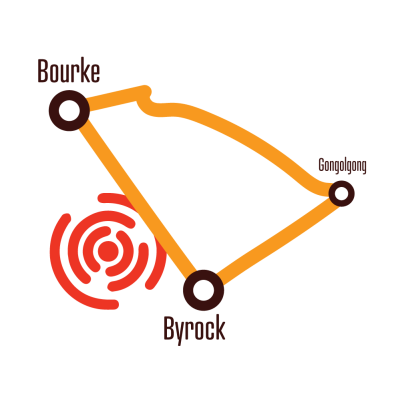
Before Byrock became established as a village, its first settlement or enterprise was further west than its current location, adjacent to the ephemeral ‘Mulga Creek’. When ore was struck in Cobar, this site, with its proximity to water, became a key stopover along the route from Gongolgon on the Bogan River, along what was known as ‘Cleavers Road’.
With the colonies competing to harness the resources of the western rangelands, New South Wales rushed a railway line directly to Bourke, which changed the nature of transport in the area, and necessitated the fledgling settlement – pub and all – to move to the current location. The town flourished with the move, as a spur line was built across to Brewarrina, coaches linked the larger towns and centres to the railhead at Byrock, while the parallel lines made their way steadily across the floodplain to Bourke.
These days, the village is home to around 20 residents, a far cry from the hundreds that once lined the streets and warranted five hotels to keep them watered. The nearby Rockholes are a place of great significance to the Ngemba people and are worth a visit, with excellent interpretive signage installed, and you can get a key from the pub to have a look at the cemetery which is also very interesting.
Like many bush villages, the pub, The Mulga Creek Hotel is the only business in town and also serves as the local post office, so it’s a good place to stop. Perhaps you can reminisce on the report provided by ‘Bak Blox’ in the Australian Star in March 1890, and the wonderful description of the character ‘Unit’.
Byrock Hotels
Take a pub crawl through history.


Visit Byrock along these Pub Routes. Discover more routes and pub history.