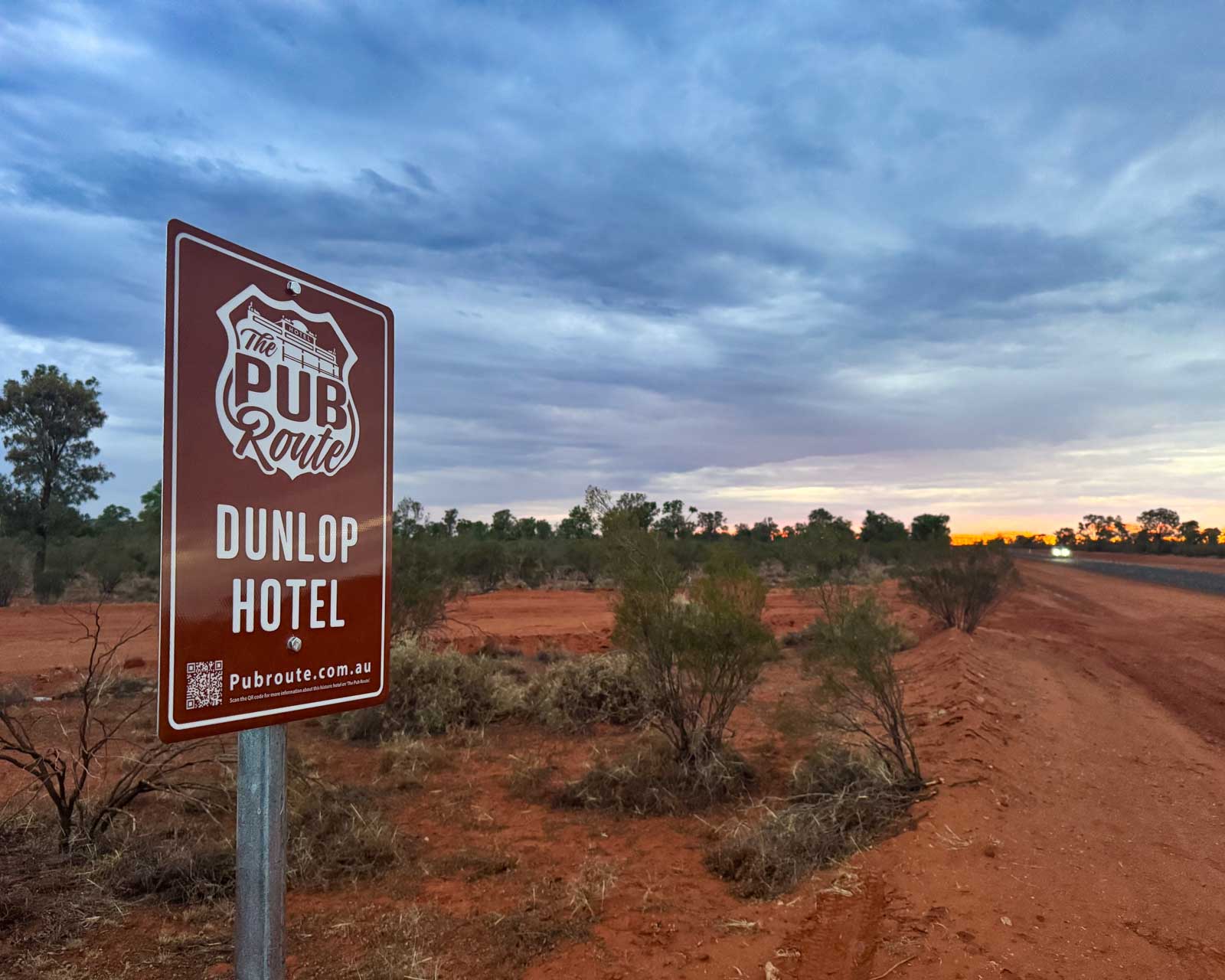
The Dunlop Hotel is identified as being “about half-a-mile towards Louth from the Dunlop wool scour” (well upstream from the main homestead) with a licence being granted to Joseph Field on the 16 July 1878. The licence was renewed in 1881 (after having apparently lapsed for two years, the mistake being attributed to “his agent”) and finally refused in 1882.
The story goes that the proprietor’s wife was burnt to death, causing the shanty to be delicensed and closed down.
The site, known to locals as ‘Fields Sandhill’, is well off the current road on a sandhill close to Louth. It is likely to have been selected as a shanty location because of its position midway between the main operations of the vast pastoral enterprise of Dunlop Station, and thriving river port of Louth.
It is easy to imagine that shearers, drovers, and itinerant workers of all kind would have need for a resting spot in such a location as they navigated to or from Louth and Dunlop anticipating, or escaping the readily available work.
The Darling River at Louth was also crossed only by punt prior to the bridge being built, and an enterprising businessman could easily see the potential of large numbers of stranded workmen seeking entertainment while the vagaries of the punt schedule were organised.
Dunlop Station was such a major enterprise, (at one time shearing for nearly eight months of the year) that it was a virtual village in its own right, and subsequently came to have a well provisioned ‘store’ which retained goods from paddle boats, cameleers and bullock teams for the ongoing station management.
The store also served as a post office, and something of a general store, where the most popular items were most likely tobacco and grog for the teams of working men. It is therefore fair to speculate that the impressive stone building still standing on Dunlop Station, was the final resting place of the enterprising, brief, and tragic story of the Fields Sandhill Shanty aka Dunlop Hotel.