

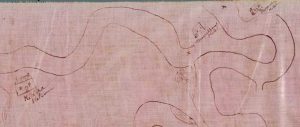
Morrison most likely built the hotel as a horse and driver changing station for their coaches but if so, they chose an unusual location. While most hotels on the Darling could be found on the outside of river bends, the Exchange was inside a very big bend, away from any direct road between Bourke and Wilcannia, which meant a long detour over cracked, black river county to go in there.
But the Exchange was only a couple of hundred yards downstream from the Kallara homestead. Its close proximity saw the hotel play an important part in the shearers’ strikes of the 1890s.
In 1894, 50 to 60 striking shearers, armed with sticks and stones, attacked police and set fire to the Kallara woolshed. The then Kallara Bend Hotel publican William Paskins was drawn into the subsequent trial of the shearers for “rioting”.
Paskins had previously been the licensee of the Stoney Creek Hotel and the Traveller’s Rest at Compadore. Following the violence at Kallara, Paskins and his young family moved to Tilpa where he ran the “Royal”. In 1898, Paskins took over the licence of the Royal Hotel, Louth, and still held it in 1901.
The Kallara Bend Hotel closed not long after Paskins left. The last licensee was William Howell who obtained it in August 1895.
In the summer of 1896, the former Commissioner for Crown Lands and current chairman of the Land Board, Mr G. C. Thompson, breathed his last at the hotel, having succumbed to heat apoplexy while on his way to Wilcannia and then Broken Hill on business.