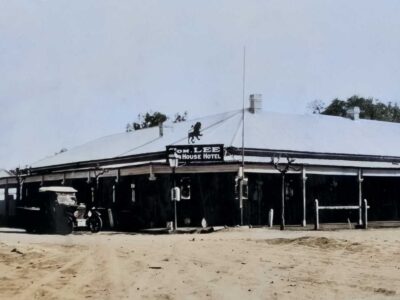
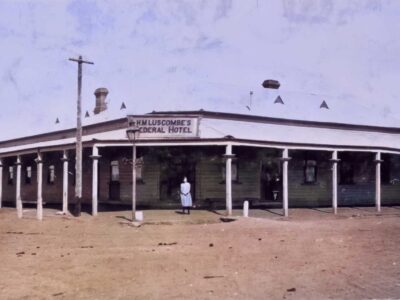
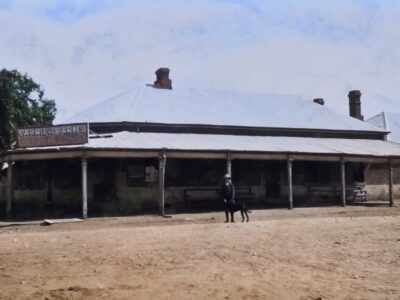
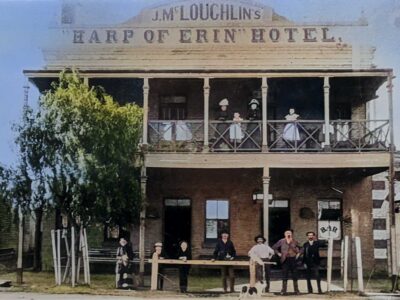
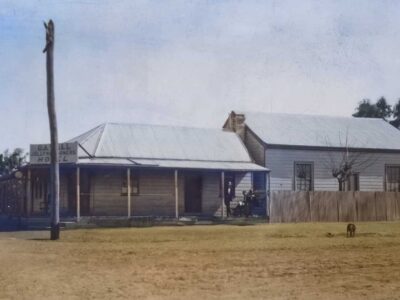
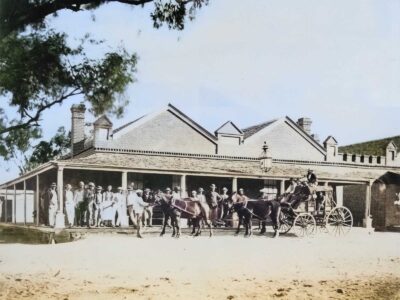
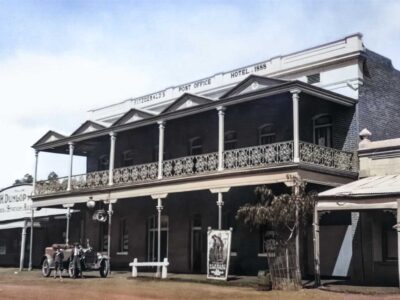
In 1862 two pioneering stockmen, William Sly and John Kelly, set about building themselves hotels in the soon-to-be township. Sly’s ‘Bourke Hotel’ and Kelly’s ‘Old Fort Hotel’ were, along with the Bourke Store, the very first buildings erected at what was then known as Worturmurie or the 18-mile point.
It’s local legend that in the early days, a steamer arrived after a long lull in river traffic had made the settlers dry. To celebrate, generous publican Sly knocked the top off a barrel of grog, triggering Bourke’s first drinking spree. A few days later, a hundred miles down-stream, the citizens of Louth counted the flagons and demi-johns floating by and put two and two together.
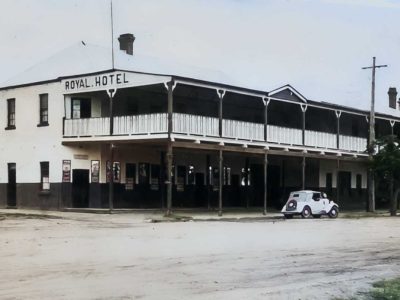
It wasn’t long before others sought to make their fortunes in the grog trade and Bourke’s third hotel, George Harris’ ‘Royal Hotel’ opened for business in 1866. By the end of the following year, Bourke boasted five licensed hotels with the addition of the ‘Victoria’ and the ‘Stockman’s’, along with three private establishments where one could take a bottle of lemonade or ginger beer slightly ‘qualified’.
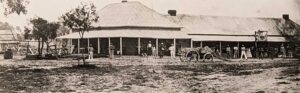
By the early 1870s, Bourke’s three hotels had grown far beyond the simple “bush inns” that they had started out. Henry Colless had taken over Sly’s Bourke Hotel, now known as ‘Tattersall’s Hotel’, and built a large brick addition, with a verandah supported by fluted Tuscan pillars. The Old Fort also boasted a last brick addition that included a dining room, sitting room and ten new apartments, while Harris’ Royal now had a large ballroom “admirably adapted for dancing, music and theatricals”.
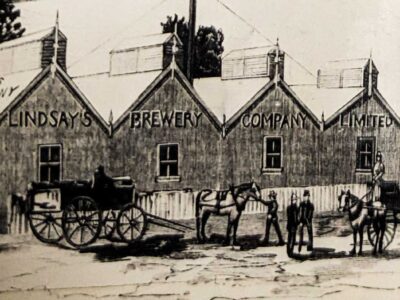
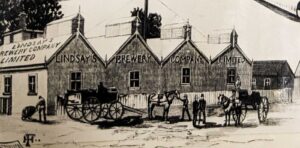
In 1879 Mr H. Lindsay had embarked on his ambitious venture, a brewery and cordial factory near Horsfall’s billabong. The Red Lion Brewery was renowned for the superior quality of its beer and continued in operation until 1901.
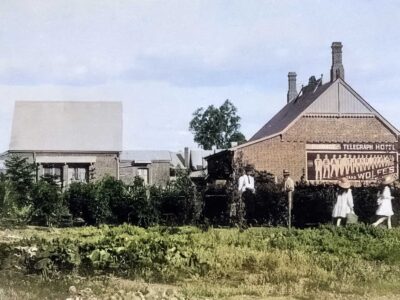
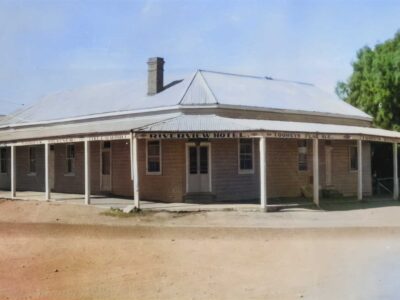
The arrival of the telegraph to town and discovery of copper at Cobar, brought about a boom in business for Bourke, and with it a glut of new hotels. A new ‘Bourke Hotel’ was soon followed by the Trafalgar (later renamed Telegraph), Shakespeare Hotel, the Jolly Waggoners, Commercial, Carriers Arms and Ned Warmoll’s Turf Hotel.
Along with these licensed establishments there were many more shacks, backrooms and “refreshment parlours” where one could get their hands on liquor of dubious quality in exchange for a few coins.
“There are 15 or 20 sly-grog shops at Bourke”, wrote a correspondent of The Pastoral Times in 1884. “The drought is the cause. They can’t get water, and so the enterprising have substituted whiskey!”
The early decades of the 20th century saw a drastic reduction in Bourke’s hotels. The district’s pastoral economy had taken a severe hit during devastating prolonged droughts and the riverboat trade was superseded by rail and road transport.
Then, in 1919, the NSW Government formed the Licenses Reduction Board and seven of Bourke’s pubs lost their licences in 1923 alone.
“Mitchell Street, which was once a long line of thriving business houses and money-making hotels is now dull and almost deserted”, wrote an old resident in 1929, returning after an absence of 15 years.
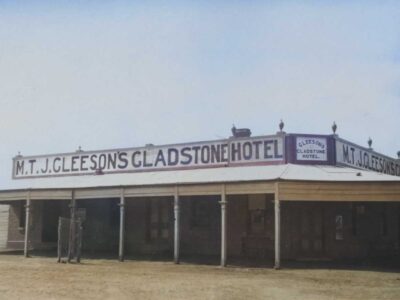
“The old Union Hotel is now a butcher’s shop, the Jolly Waggoners’ a baker’s shop, the Gladstone Hotel a motor garage, the Empire Hotel a boarding house. Tattersalls and the Telegraph have also, long ago, put up the shutters, and the old Caledonian Hotel is now used as a Council Chambers.”
Of those 20 hotels in 1892, only two remain today: the Royal (now named the Port of Bourke Hotel) and the Oxford..
The Hotels of Bourke
-
Shakespeare
-
Family
-
Commercial
-
Great Western
-
Cambridge
-
Central Australian
-
Oxford